
Yi Zhi
NamingYi Zhi (Fructus Alpiniae Oxyphyllae)——Ben Cao Shi Yi (A Supplement to the Compendium of Materia Medica)The Processing of Yi ZhiOriginThe ripe fruit of the herbaceous plant Alpinia oxyphylla Miq. of family Ginger.LocationMainly cultivated in Hainan province and also cultivated in Guangdong and
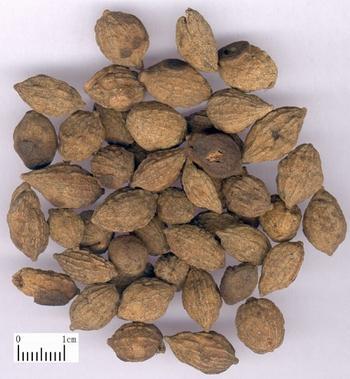
Naming
Yi Zhi (Fructus Alpiniae Oxyphyllae)——Ben Cao Shi Yi (A Supplement to the Compendium of Materia Medica)
The Processing of Yi Zhi
Origin
The ripe fruit of the herbaceous plant Alpinia oxyphylla Miq. of family Ginger.
Location
Mainly cultivated in Hainan province and also cultivated in Guangdong and Guangxi provinces of China.HarvestCollected the ripe fruit after it turns from green to red in summer and autumn.
The actual smell and taste
Specially fragrant, pungent and slightly bitter.
Best quality
Large, full, strong smell.
Processing
Get the kernel after stir-baked with sand and shelled, unprocessed or stir-baked with salt solution slightly. Smashed before using.
The Effect of Yi Zhi
Property
Sweet, pungent, astringent, warm; kidney and spleen meridians entered.
Actions
Tonify kidney yang, secure essence and reduce urination, warm spleen yang, check salivation, check diarrhea.
Indications
A. Seminal emission, spermatorrhea, enuresis and frequent urination due to insecurity of kidney deficiency
It is indicated for seminal emission; spermatorrhea, enuresis and frequent urination due to kidney yang deficiency, deficiency cold in lower energizer, because it can tonify kidney yang, and also can secure essence and reduce urination. It can both tonify and astringe, therefore, it treats both the branch and root of the disease. But it is more astringent than tonifying, especially good at reducing urination. For enuresis and frequent urination due to insecurity of kidney deficiency, it could be used as main herb and combined with other herbs of tonifying kidney, securing essence, warm kidney yang and dispelling cold, for instance, it is used with Shan Yao and Wu Yao, in the formula Suo Quan Wan from Fu Ren Da Quan Liang Fang. For seminal emission and spermatorrhea due to kidney yang deficiency, it is combined with other herbs to tonify kidney, secure essence, for instance, it is used with Rou Cong Rong and Long Gu, in the formula Gu Zheng Dan from Wei Sheng Bao Jian.
B. Excessive salivation and diarrhea due to deficiency cold of spleen and kidney
It is very suitable for excessive-salivation due to fluid ascending caused by hypo-activity of spleen yang, dysfunction of security, or kidney yang deficiency, dysfunction of qi transformation, because it can warm and tonify spleen and kidney, and it is also good at checking salivation. It could be used singly or combined with spleen and kidney warming and tonifying herbs, for instance, it is used with Fu Zi, Dang Shen and Bai Zhu. It can tonify yang of kidney and spleen, for diarrhea due to spleen yang deficiency, or both spleen and kidney yang deficiency, it is combined with spleen and kidney warming and tonifying herbs.
Dosage and Administrations
Decoct 3~10 g.
Did this article help you?
Your answer directly shapes how this article gets rewritten. Several sections on this site exist because readers asked for them.
Keep readingRelated for you
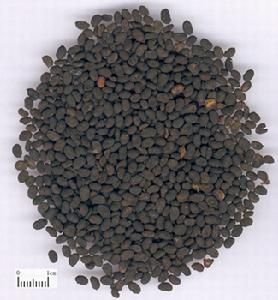 Fructus Psoraleae
NamingBu Gu Zhi (Fructus Psoraleae)——Yao Xing Lun (Treatise on Herb Property)The Processing of Fructus PsoraleaeOriginThe ripe fruit of the annual herbaceous plants Psoralea corylifolia L. of family Fulse.LocationMainly produced in Sichuan, Henan and Anhui provinces in China.HarvestCollected the rip
补骨脂
NamingBu Gu Zhi (Fructus Psoraleae)——Yao Xing Lun (Treatise on Herb Property)The Processing of 补骨脂OriginThe ripe fruit of the annual herbaceous plants Psoralea corylifolia L. of family Fulse.LocationMainly produced in Sichuan, Henan and Anhui provinces in China.HarvestCollected the ripe fruit in aut
益智
NamingYi Zhi (Fructus Alpiniae Oxyphyllae)——Ben Cao Shi Yi (A Supplement to the Compendium of Materia Medica)The Processing of 益智OriginThe ripe fruit of the herbaceous plant Alpinia oxyphylla Miq. of family Ginger.LocationMainly cultivated in Hainan province and also cultivated in Guangdong and Guan
Fructus Psoraleae
NamingBu Gu Zhi (Fructus Psoraleae)——Yao Xing Lun (Treatise on Herb Property)The Processing of Fructus PsoraleaeOriginThe ripe fruit of the annual herbaceous plants Psoralea corylifolia L. of family Fulse.LocationMainly produced in Sichuan, Henan and Anhui provinces in China.HarvestCollected the rip
补骨脂
NamingBu Gu Zhi (Fructus Psoraleae)——Yao Xing Lun (Treatise on Herb Property)The Processing of 补骨脂OriginThe ripe fruit of the annual herbaceous plants Psoralea corylifolia L. of family Fulse.LocationMainly produced in Sichuan, Henan and Anhui provinces in China.HarvestCollected the ripe fruit in aut
益智
NamingYi Zhi (Fructus Alpiniae Oxyphyllae)——Ben Cao Shi Yi (A Supplement to the Compendium of Materia Medica)The Processing of 益智OriginThe ripe fruit of the herbaceous plant Alpinia oxyphylla Miq. of family Ginger.LocationMainly cultivated in Hainan province and also cultivated in Guangdong and Guan
Something this article didn't cover?
Ask us directly — we reply within 2 days. Great questions become public articles.
Ask a question →